
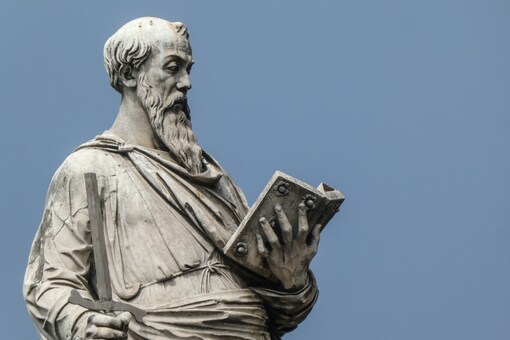

Matthew-متی
IN THE LANDwhere Jesus lived there was among the Jews one class of people whom all other Jews despised. This class was the publicans, or tax-gatherers, who worked for the Roman government. The Jews hated the Roman government because they wished to be an independent nation, having a Jewish ruler over them. For this reason they were eagerly awaiting the time when the kingdom of God should come. They believed the kingdom of God would set up in the same country as that in which David used to live and rule. And they expected to become the greatest people in all the world when that kingdom should be set up. Any Jew who was friendly with the Roman government they hated, because they thought he was not being true to his own nation.
For many years the Jews had believed God would send them a King who would deliver them from the rule of stronger nations. They did not understand when the prophets taught of Jesus’ coming to earth that he would come to free them from their greatest enemy, Satan. They seemed to forget that they needed freedom from sin’s bondage more than they needed freedom from the rule of the heathen kings.
But the Jews who were more friendly toward the Romans, and who worked for the Roman government, were called publicans. They took the tax money from the Jews, which the ruler at Rome demanded of them. And often they took more money than the Roman ruler called for. In this manner they stole from the people, and became very rich themselves. And the people hated them, and called them sinners.
Not all the publicans robbed the people by asking too much tax money from them. But because many of them did this, the people believed that all of them were guilty of such wrong-doing. And they called every publican a sinner.
One day while Jesus was passing along a street in the city of Capernaum he saw a man named Matthew sitting at a publican’s table, taking the tax money from the people. Although Matthew was a publican, whom other Jews despised, Jesus saw the heart of this man and he knew Matthew would make a good disciple. So he called this publican to follow him, and Matthew gladly left his money-table and obeyed the call.
Matthew was also called Levi, for the Jews sometimes had two names. And after he began to follow Jesus he remembered his friends of other days. He believed they, too, would be glad to see Jesus and to hear his words. So Matthew prepared a great feast or banquet and called many of his publican friends to the feast. He invited other people too, whom the proud Jews despised and called sinners, and then he brought Jesus and the other disciples to the feast.
The scribes and Pharisees also came to Matthew’s house that day, though they had not been invited to the feast. They stood about in the courtyard or even in the large dining-hall, looking on and talking to each other about what they saw. This was not so rude as it seems, for this was a custom among those people and Matthew was not at all surprised when they came.
These onlookers began to find fault when they saw Jesus sitting among the publicans and sinners. They felt themselves too good to keep company with despised folk, and they were surprised that Jesus should eat with Matthew and his friends. So they called Jesus’ disciples aside and asked, “How is it that you Master east and drinks with publicans and sinners?”
Jesus heard the questioning of these fault-finders, and he said to them, “It is not well people who need to call for the services of a doctor, but people who are sick. And so I have not come to call righteous people, but I have come to call sinners to repent.”
He knew the scribes and Pharisees believed themselves to be too righteous to need repentance, but he knew the publicans and sinners realized that they were not pleasing God. And they would listen to Jesus’ words, and humble their hearts. Many of them would gladly forsake their sins and follow Jesus to learn of him.
Matthew, the publican, became a very useful man for God. It was he who wrote the book called the “Gospel According to Matthew,
متی
The apostle shielded himself with the sign of the cross and confidently went out to meet these beasts. The minute the dragons saw him, they fell asleep at his feet, and he said to the sorcerers: “Where is your magical power now? Wake them up if you can! If I had not prayed to the Lord, I would have turned back upon you the harm you had thought to inflict upon me.” And when all the people had gathered together, Matthew ordered the dragons in Jesus’ name to go away, and off they went, harming no one.
While this story may not have strong historical ground, often dragons are used in stories to visually portray a demonic presence. Considering that sorcerers were often associated with the worship of pagan gods and deities, it is understandable why a “dragon” would be associated with them. In this case, it is possible the story explains how St. Matthew acted as an exorcist of the Ethiopian community and cast out demons.
At the same time, since many of these dragon stories originated in the Middle East and Northern Africa (and the reality that crocodiles are dragon-like creatures that can grow up to 16 feet long), it might be possible that St. Matthew tamed a pair of crocodiles.
Either way, the story highlights the power of God over evil (and nature) and how God used the apostles to bring the light of Christ to all corners of the world.
